
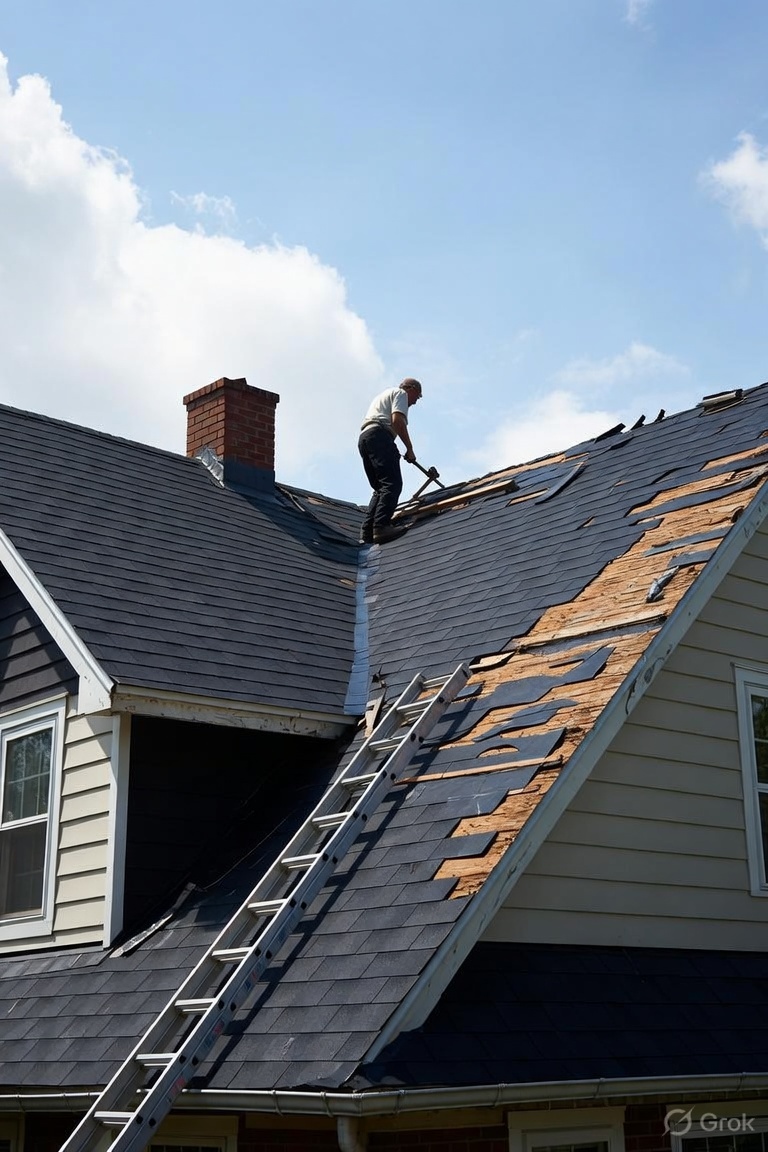
What Actually Happens When You Need Emergency Roof Repair (And What You Should Do)
Water coming through the ceiling has a way of making everything else stop. You stand there for a second, staring at the drip, and your brain goes through the usual stages: denial, then mild panic, then “okay, what now?”
I’ve watched this play out more times than I can count. Some people freeze. Others start climbing onto a wet roof at night, which is almost never a good idea. The ones who do best are usually the ones who slow down just enough to handle the inside first.
Is it really an emergency?
If water is actively moving into the house, yes. If the ceiling is starting to bulge, yes. If there’s a hole you can see daylight through, or a tree branch went through, obviously yes.
A small brown stain that’s been the same size for two months? That’s annoying, but it’s not the same thing. You can usually wait for a normal appointment on those. Active dripping is different. The clock starts once water is inside.
The first half hour matters more than people think
Don’t run outside with a ladder right away. Start inside.
Move the furniture and anything that can get ruined. Put buckets under the drips. If the ceiling is holding water and starting to sag, poke a small hole in the lowest point so it drains into a bucket instead of collapsing later. It’s not elegant, but it works.
If water is near lights or outlets, kill the power to that area if you can do it safely. Wet electricity is not something you want to test.
Take pictures before you clean anything up. Insurance companies like documentation, and you’ll be glad you have them later.
Most of the time, this is all you can (and should) do in the first stretch. The roof itself can wait until it’s safer to deal with.
Temporary cover and the tarp question
A lot of people ask about putting a tarp up themselves. Sometimes it’s possible. On a low, simple roof in calm weather, a determined homeowner can get one on. On a steep roof, or while it’s still raining and windy, it’s a good way to end up in the emergency room.
Professional emergency tarping usually runs somewhere between three and seven hundred dollars for a normal house. It can go higher if the roof is complicated or the call is in the middle of the night during a storm. After-hours work costs more. That’s just how it is.
The tarp isn’t a permanent fix. It’s a way to stop the bleeding so the real repair can happen when conditions are better.
What the numbers look like in 2026
Costs move around depending on where you live and how bad the damage is, but here’s the rough picture most homeowners run into:
Emergency service call or quick inspection often lands between $150 and $500. A basic tarp job is commonly $300–700. Small leak or missing shingle repairs can be a few hundred up to around $1,800. Once you’re into bigger storm damage or structural work, it climbs fast — sometimes into the thousands.
After-hours and storm surge pricing is real. Companies that drop everything and show up at 2 a.m. charge for that.
Insurance and the “document everything” advice
Most policies expect you to take reasonable steps to limit further damage. That’s why the tarp and the photos matter. Call your insurance company once the immediate situation is under control and ask what they need. Keep every receipt.
One thing that still surprises people: some adjusters move faster when you already have clear photos and a temporary repair in place. It shows you didn’t just sit there watching the water come in.
Choosing who to call
When you’re stressed, the first person who answers the phone looks like a hero. That’s how a lot of people end up with storm chasers who push a full roof replacement before they’ve even looked properly.
Ask if they’re licensed and insured. Look at recent reviews that specifically mention emergency or storm work. A decent company will stabilize the roof first and give you time to decide on the permanent fix. The ones who try to get you to sign a big contract while water is still dripping are usually the ones to avoid.
A few things people get wrong
Waiting too long because “it’s just a small drip” is the most common mistake. Water finds its way into insulation and wood faster than most people expect.
Climbing up in the dark or during the storm is the second.
And assuming every leak needs a brand-new roof is the third. Plenty of emergency situations are handled with a solid repair once the weather clears.
Bottom line
Get the water under control inside the house first. Protect the area. Document it. Then get someone competent out to stop the source.
That’s the sequence that keeps the damage (and the bill) from getting worse than it has to be.
If you’re dealing with an active leak right now, put the phone down and go put a bucket under it. The rest can follow from there.