How to Find the Source of a Roof Leak (Before It Ruins More of Your House)
A brown stain on the ceiling is usually the first sign something is wrong. The frustrating part is that the stain is almost never directly under the actual hole or crack in the roof. Water travels. It can run along rafters, follow pipes, or soak into insulation for a while before it finally shows up where you can see it.
That’s why just looking at the stain doesn’t tell you much. You have to go looking for the real entry point.
Start from the inside
The safest place to begin is the attic, if you have one and it’s safe to enter.
Take a flashlight and look for:
- Dark or wet spots on the underside of the roof deck
- Damp or compressed insulation
- Black streaks or water marks on the wood
- Any place where daylight is coming through
If the insulation is wet, pull it back carefully so you can see the wood underneath. Water often leaves a trail. Follow the dampness uphill — water doesn’t flow upward, so the source is almost always higher than where you first notice moisture.
If you don’t have an attic or can’t get into it safely, you’re limited to what you can see from below. In that case, note exactly where the stains are and whether they get worse during or right after rain.
Common places roof leaks actually start
Most leaks don’t come from the middle of a clean stretch of shingles. They usually start at transitions and penetrations:
- Around the chimney or skylight
- Where the plumbing vent pipe comes through
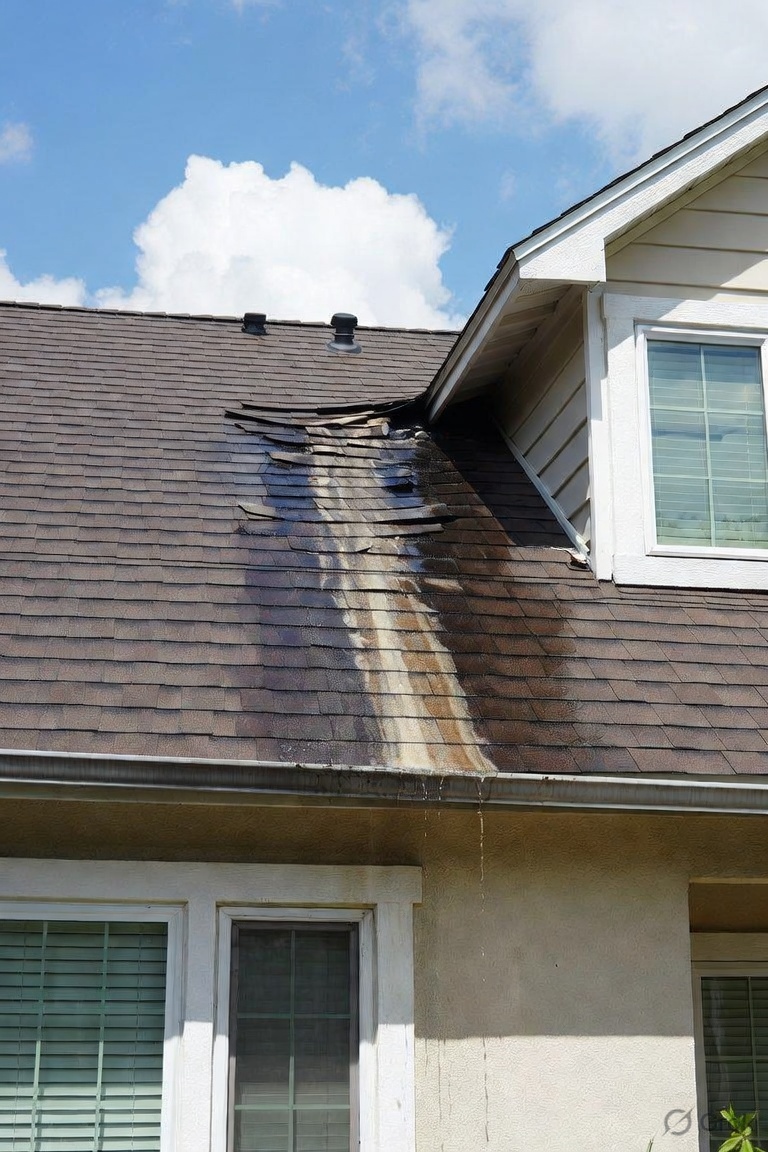
- Along the valleys (where two roof planes meet)
- At the edge where the roof meets a wall
- Around satellite dishes or other roof-mounted equipment
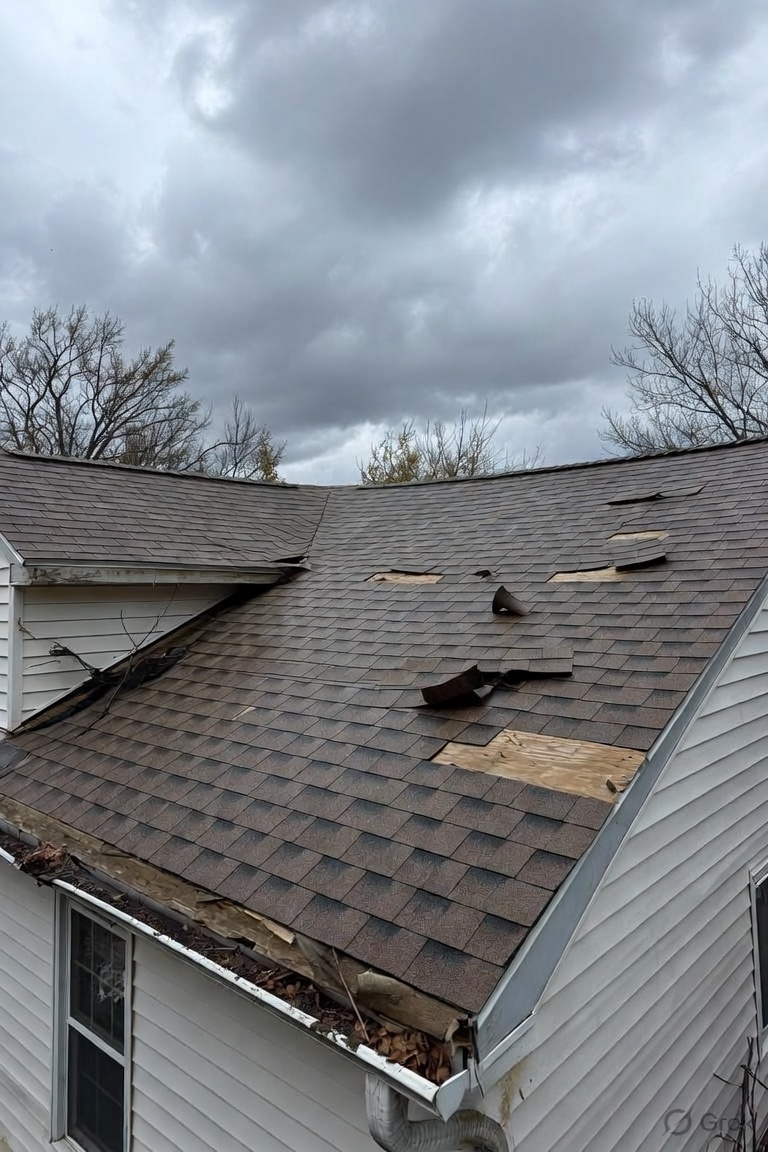
- Under lifted or missing shingles after wind
Flashing (the metal pieces that seal these areas) fails more often than people expect. Once the seal goes, water finds its way in.
What to do once you think you’ve found it
If you can see the entry point clearly from the attic and it’s a small gap, some people temporarily seal it from below with roofing tape or a patch. That can slow things down, but it’s not a real repair.
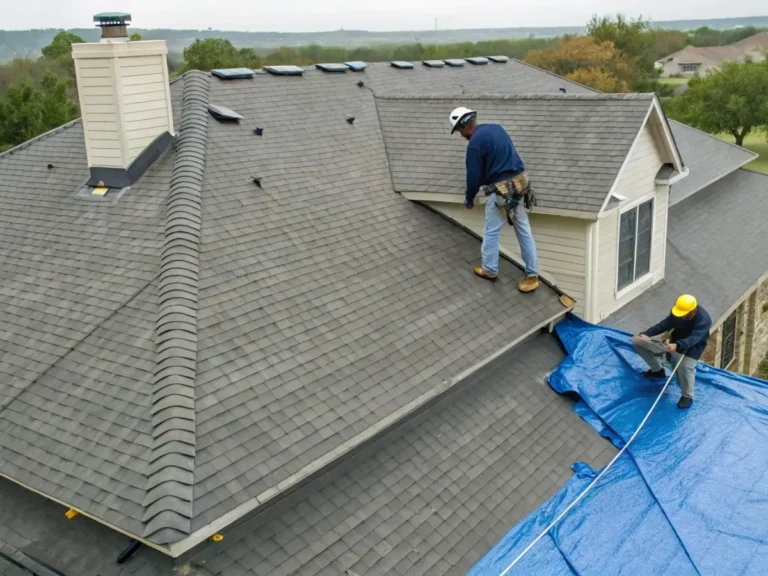
The better move is still to get the outside addressed. A temporary tarp over the area from above stops more water from entering while you arrange a proper fix.
While you’re waiting, keep controlling the water inside the same way you would in an emergency: buckets, plastic on the floor, and moving anything that can be damaged.
Ceiling stains and what they tell you
Not every stain means an active leak right now. Old stains that haven’t changed in months are often from a past problem that has already been fixed or dried out. New stains, or ones that grow after rain, are the ones that need attention.
If the drywall feels soft or starts to bulge, treat it as active. Water is collecting above it.
A note on timing
Roof leaks rarely stay small. Once water is getting in regularly, it starts affecting insulation, wood, and eventually the ceilings and walls below. The longer it runs, the more expensive the interior repairs become.
Finding the source early is almost always cheaper than waiting until the damage is obvious from every room.
If you’re not comfortable getting into the attic or the roof is steep and complicated, it’s reasonable to call someone who does this regularly. A good inspection can save a lot of guessing.