What to Do After a Storm Damages Your Roof
Storms have a way of leaving behind more than just wet ground and scattered branches. High winds, hail, and falling debris can damage a roof in ways that aren’t always obvious from the street. Sometimes the real problems only show up days later when water starts finding its way inside.
If a storm just passed through your area, it helps to know what to check and what can wait.
First, stay safe
Don’t climb onto the roof right after a storm if it’s still wet, windy, or covered in debris. Wet shingles and loose material make falls more likely. Look from the ground first, and only go up if conditions are clearly safe and you feel comfortable doing it.
If you see large sections of missing shingles, a sagging area, or a tree limb sitting on the roof, treat it as something that needs professional attention sooner rather than later.
What to look for from the ground
Walk around the house and look carefully at the roof lines. Things worth noting:
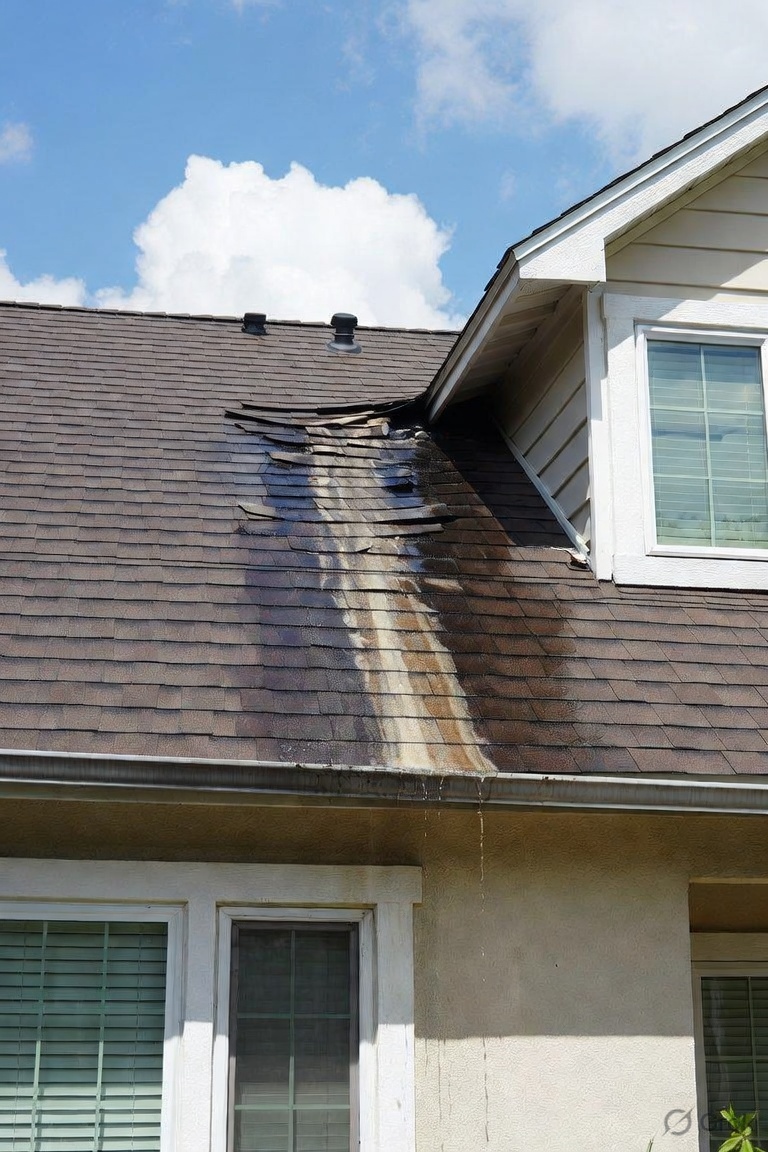
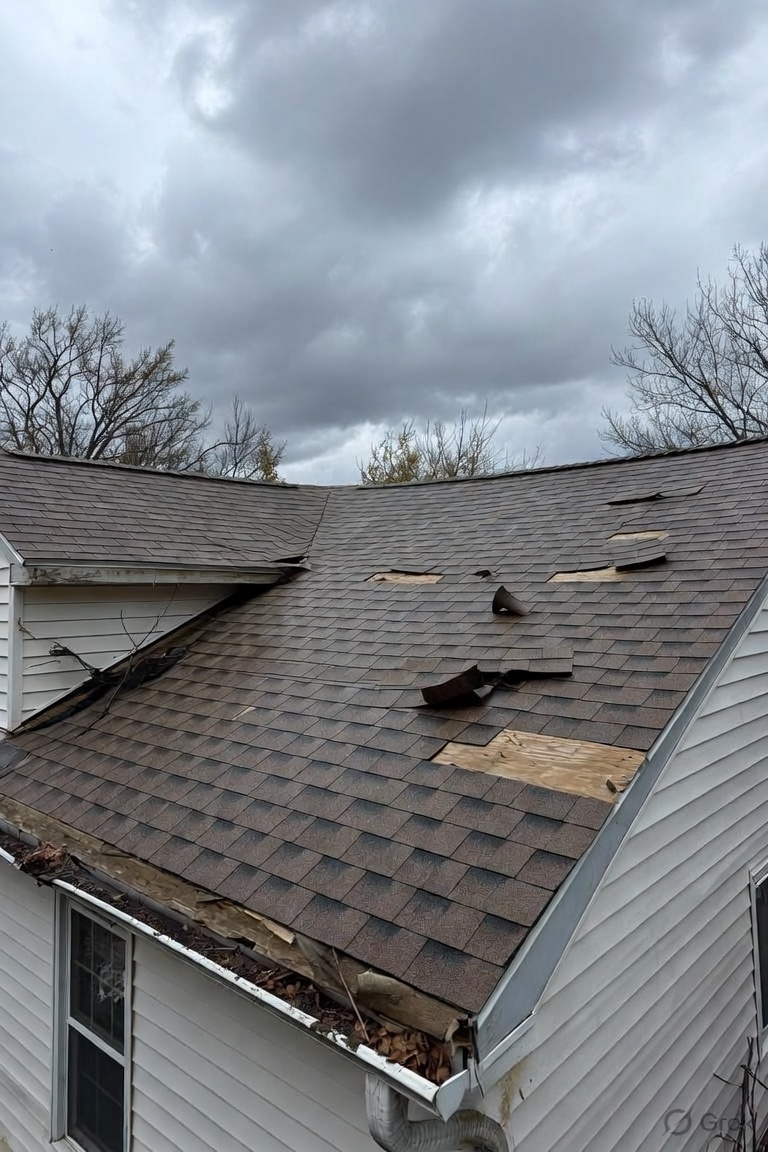
- Missing, curled, or lifted shingles
- Granules from asphalt shingles collected in the gutters or at the downspouts
- Dents or cracks in the shingles (especially after hail)
- Damaged or bent flashing around chimneys, vents, or skylights
- Debris sitting on the roof or against the edges
- Any visible holes or soft-looking spots
Hail damage can be subtle. Small bruises or cracks in the shingles often don’t stand out until you get closer or until the next rain exposes them.
Document everything early
Take clear photos from multiple angles while the damage is still fresh. Include wide shots of the whole roof section and closer shots of specific problem areas. If there are fallen branches or other debris that caused damage, photograph those too.
This documentation matters for insurance. The longer you wait, the harder it can be to show that the damage came from a specific storm.
Temporary protection if needed
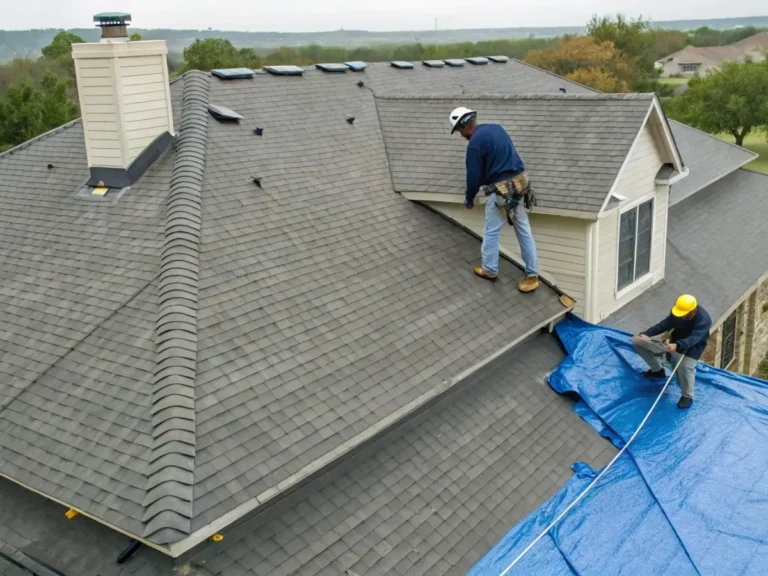
If you can see open areas where water could get in, a temporary tarp is often the next step. Professional emergency tarping after storms usually falls in the same range as other emergency work — a few hundred dollars for a typical residential job, sometimes more depending on the size and difficulty.
The goal is simply to keep additional water out until a proper repair can be scheduled.
Insurance and the claims process
Most homeowners policies cover sudden storm damage, including wind and hail. The process usually goes smoother when you:
- Report the claim relatively quickly
- Have clear photos
- Have taken reasonable steps to prevent further damage (like tarping if needed)
Some companies send an adjuster out. Others may ask for estimates from contractors. Be cautious of anyone who shows up unsolicited right after a big storm and pressures you into signing a contract on the spot. Storm-chasing crews are common in the days following severe weather.
When to call for help
Call a roofing professional if:
- You see missing sections of roofing material
- Water is already entering the house
- There is structural concern (sagging, large impact from a tree)
- You’re simply not sure how serious the damage is
A proper inspection after a storm can catch problems that aren’t obvious yet. Small openings that seem minor can let in a surprising amount of water over the next few rains.
One practical note
Not every mark on a shingle means the roof needs full replacement. Many storm-related issues are handled with targeted repairs. A good contractor should be able to explain the difference between cosmetic marks and damage that actually affects the roof’s ability to keep water out.
After the immediate situation is handled, it’s worth keeping an eye on the ceiling and attic for a few weeks. Sometimes leaks from storm damage don’t show up until the next significant rain.